- Daily Energy Market Update
- Posts
- Daily Energy Market Update March 18,2026

March 18, 2026
May WTI is up $1.88 at $97.41 May RB is up 9.43 cents at $3.1758 May ULSD is up 19.27 cents at $3.9955
Liquidity’s Daily Market Overview
Crude oil prices are higher now after trading much lower during most of the overnight. The retreat in crude prices was due to the agreement between Iraq and the Kurds to resume crude exports via a pipeline through Turkey. But, crude prices have rebounded this morning as Iran says that the large South Pars gas field was attacked. Iran has responded this morning with threats to hit Gulf States targets. Product prices are up much more than those for the crude oil. The products are further supported by draws seen in last night's API data, the ongoing disruption overall in crude/fuel supplies and the news of labor issues at a BP refinery.
The energy complex rose this morning on the Iranian state TV report of a hit on the South Pars gas field (which is shared by Iran and Qatar) including the nearby Asaluyeh oil industry/petrochemical facilities. Iran says that there were explosions heard at the Asaluyeh refinery. The attack was made by the Israelis in coordination with the US. (Market News/Bloomberg/Jerusalem Post) The South Pars/North Dome field is the world's largest natural gas field, located offshore in the Persian Gulf. It provides about two-thirds of Iran’s domestic gas and a massive portion of Qatar’s LNG exports. (Wikipedia)
Crude exports from Iraq's Kirkuk fields to Turkey's Ceyhan port have resumed today via pipeline, North Oil Company said, after Baghdad and the Kurdistan Regional Government agreed on Tuesday to restart flows. The North Oil Company added that Kirkuk crude exports would resume with an initial capacity of 250 MBPD. (Reuters)
The Trump administration intends to take additional steps to ease sanctions on Venezuela’s oil sector in an effort to increase crude production, Bloomberg sources said.
BP on Tuesday said that it will lock out approximately 800 United Steelworkers members from its 440 MBPD Whiting, Indiana, refinery starting at 12:00 a.m. on March 19, citing a breakdown in negotiations over a new labor agreement. BP noted it would continue bargaining in good faith. Reuters commentary adds :" The stakes at Whiting are high, as any operational disruptions could exacerbate an already tight global refined-products market, raising supply concerns across the Midwest and potentially beyond."
Estimated flows through the Strait of Hormuz are down 19.3 MMBPD, or 97%, versus normal and have stabilized at 0.7 MMBPD in recent days, Goldman Sachs said in a note.
One loading berth at the Fujairah Oil Tanker Terminals, which handles liquid cargo including fuels, partially restarted while others were still suspended as of Tuesday evening, according to an Inchcape Shipping services note cited by Bloomberg.
Bloomberg reports that refiners in Northeast Asia are purchasing more US crude in separate deals, spurred by the disruption in the Middle East supplies due to war in the region. Asian refiners have been ramping up purchases of crude from outside the Middle East and are now willing to pay elevated premiums to secure supply, Bloomberg said on Tuesday. The search for crude from outside the Mideast is due to the disruption caused by the closure of the Strait of Hormuz, which has seen Mideast crude grade prices rise to record levels. Asian refiners are moving earlier than usual to secure crude oil from Russia's Far East, as hopes for a swift resolution to Middle Eastern supply disruptions fade, as per WSJ reporting.
ING analysis says that the move in refined product prices has been even more extreme in the jet fuel market with the jet regrade trading above $400/t. The European jet fuel market is heavily exposed to Persian Gulf supplies; around half of European imports come from the region. In addition, around 23% of the global seaborne jet fuel trade moves through the Strait of Hormuz. ING adds:" The only way we’ll see refined product cracks normalize is with a resumption of crude oil and refined product flows through the Strait of Hormuz. Until then, markets will continue to tighten as refiners are forced to reduce operating rates amid feedstock shortages."
API Forecast Actual
Crude Oil Unch/+0.7 +6.6
Gasoline -0.5/-1.97 -4.56
Distillate -0.919/-2.1 -1.39
Cushing n/av +0.8
Runs -0.7/+0.6% n/av
The fuel prices at the pump in the US have risen further today. The average price for gasoline, as per AAA data, is $3.842, which is up 5.2 cents from Tuesday and up 86.0 cents from February 27th. The diesel fuel price average is $5.068 today, up 2.4 cents from yesterday and up $1.414 from February 27.
Energy Market Technicals
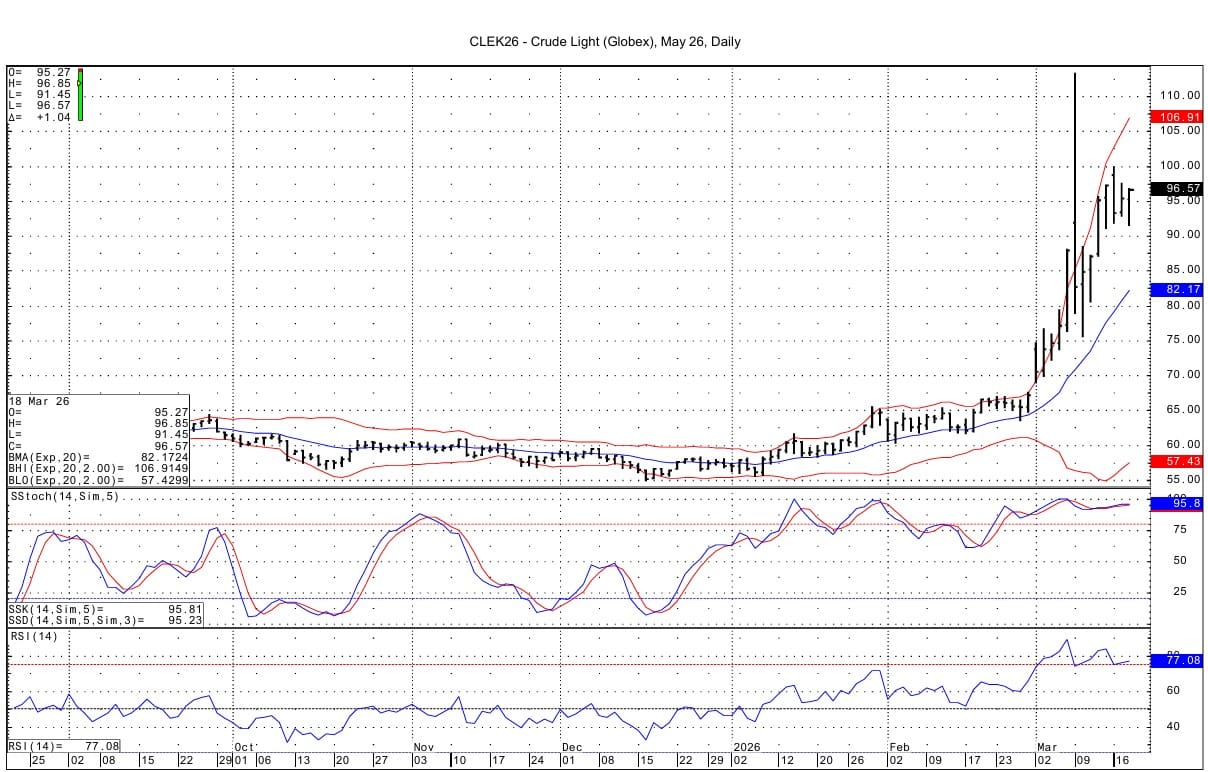
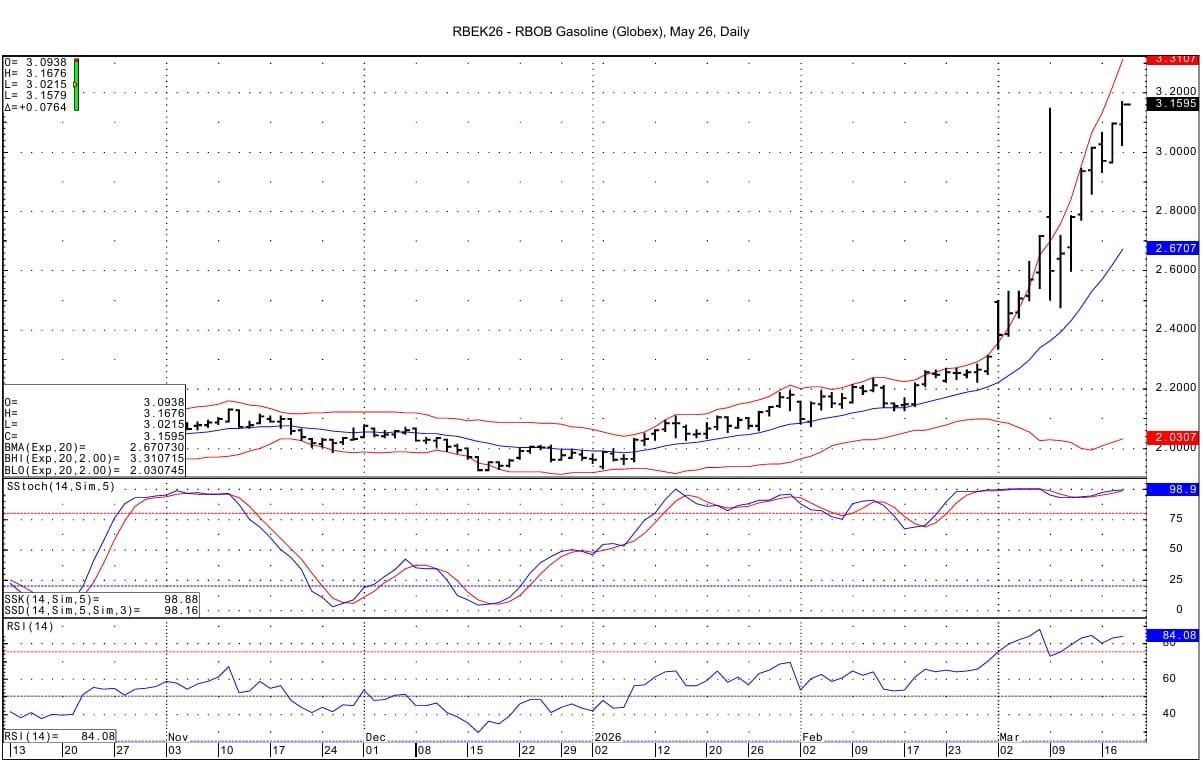
Momentums are slightly positive for the energies as they approach being overbought. The RSI momentum indicator remains overbought for the energies.
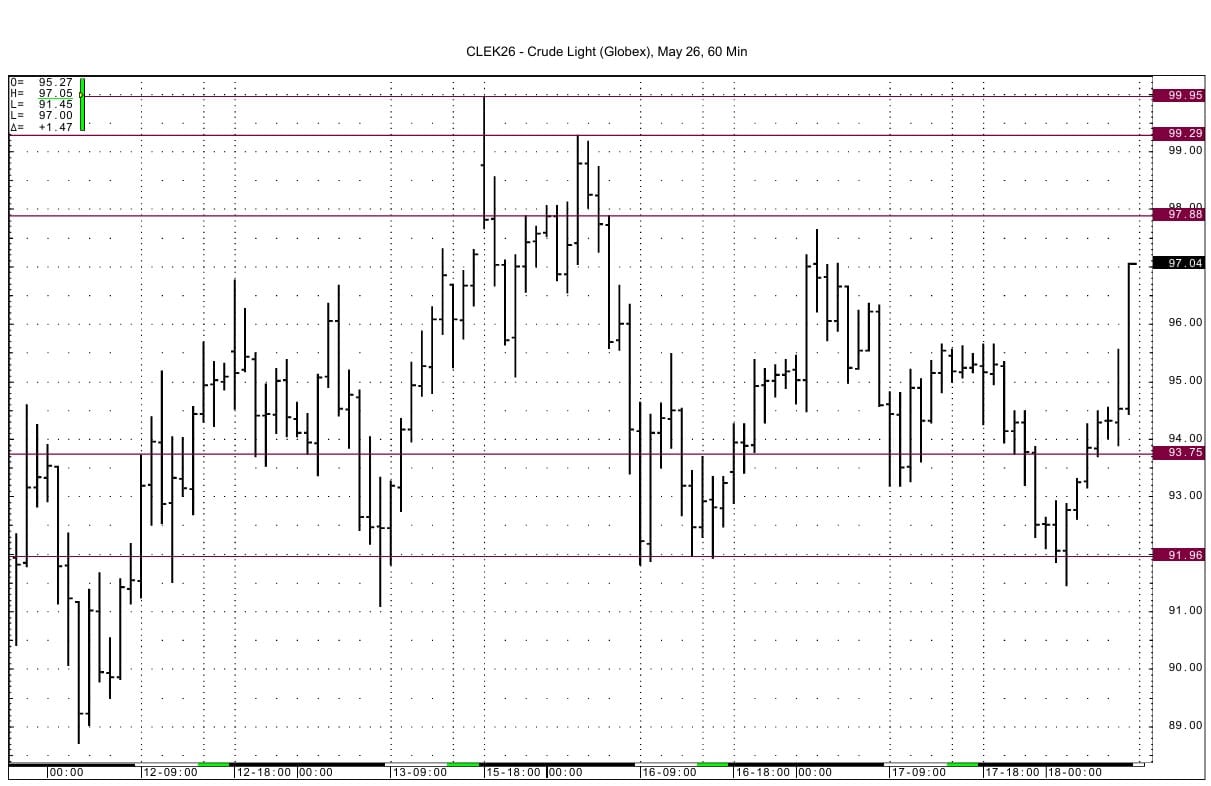
May WTI has resistance above at 97.68, and then at 99.29 and then at the recent high at 99.95. Support is seen at 93.69-93.77 and then at 91.86-91.96.
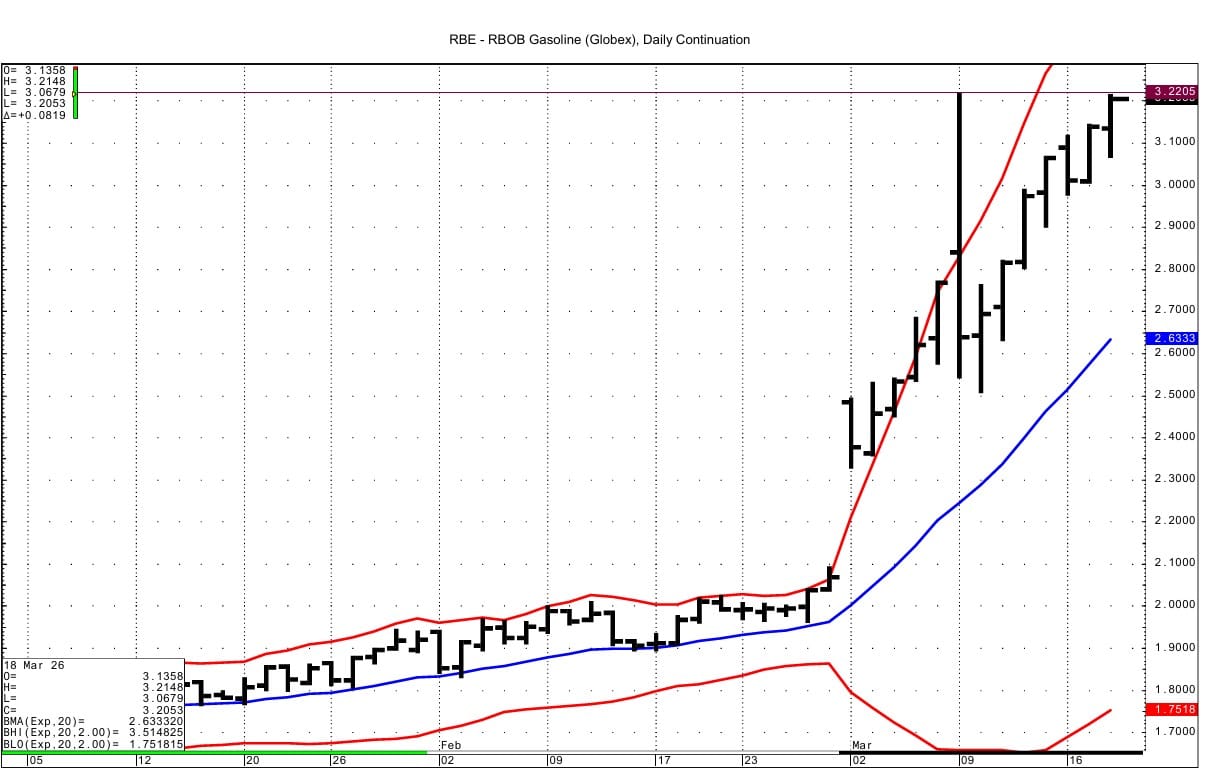
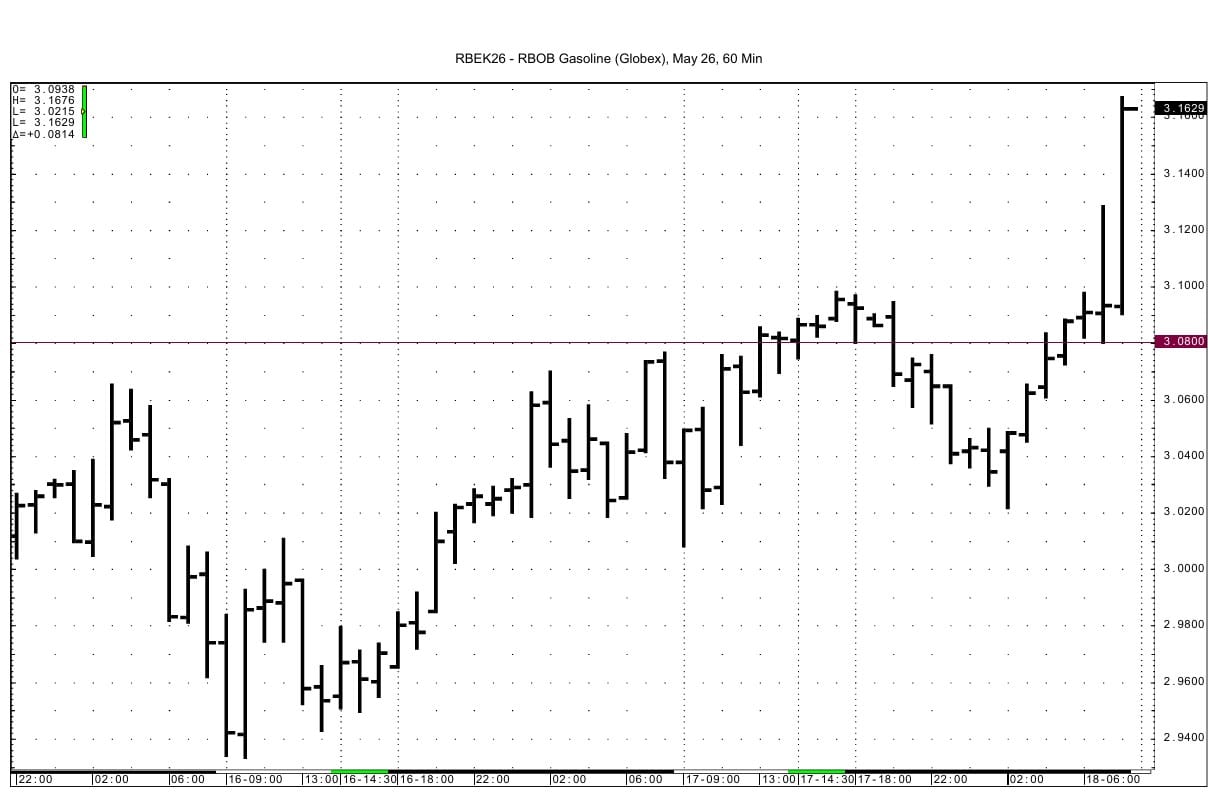
May RB futures have risen to a fresh high for the contract. Resistance may be seen at 3.2205 which is the recent RB spot futures high. Support comes in at 3.0800. There is a stepladder up pattern to the chart.
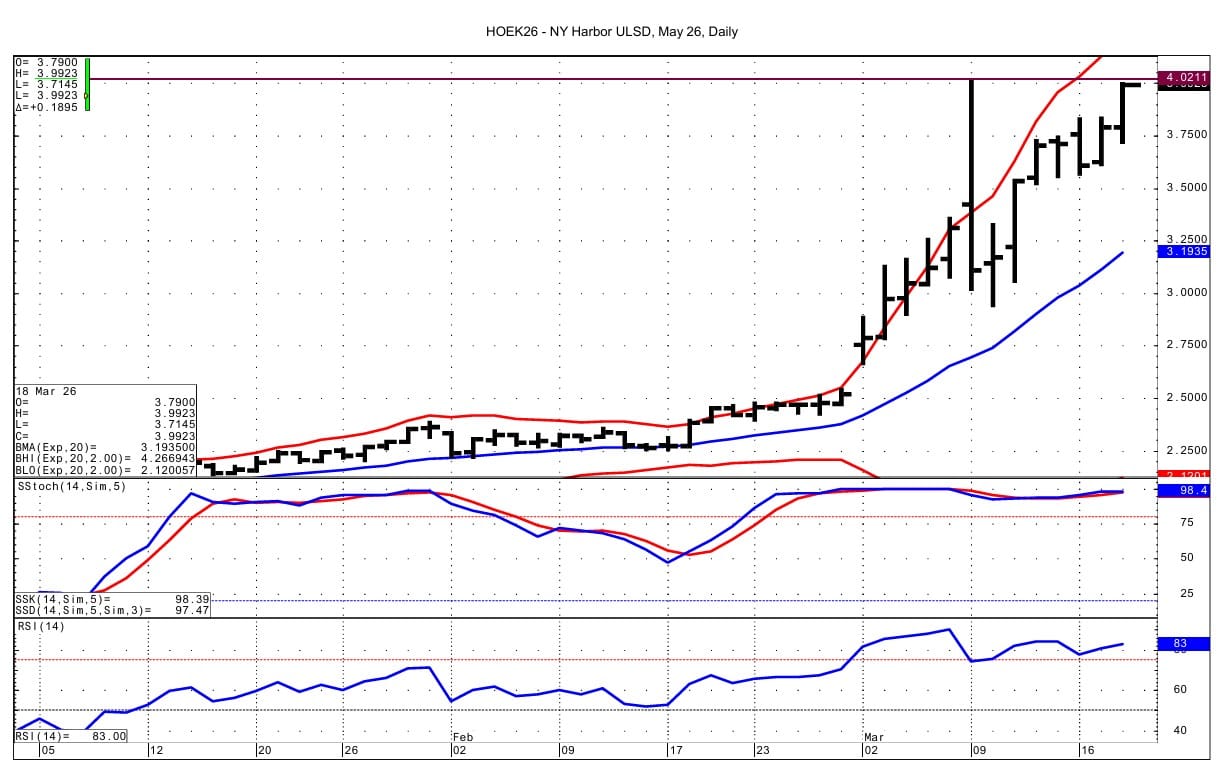
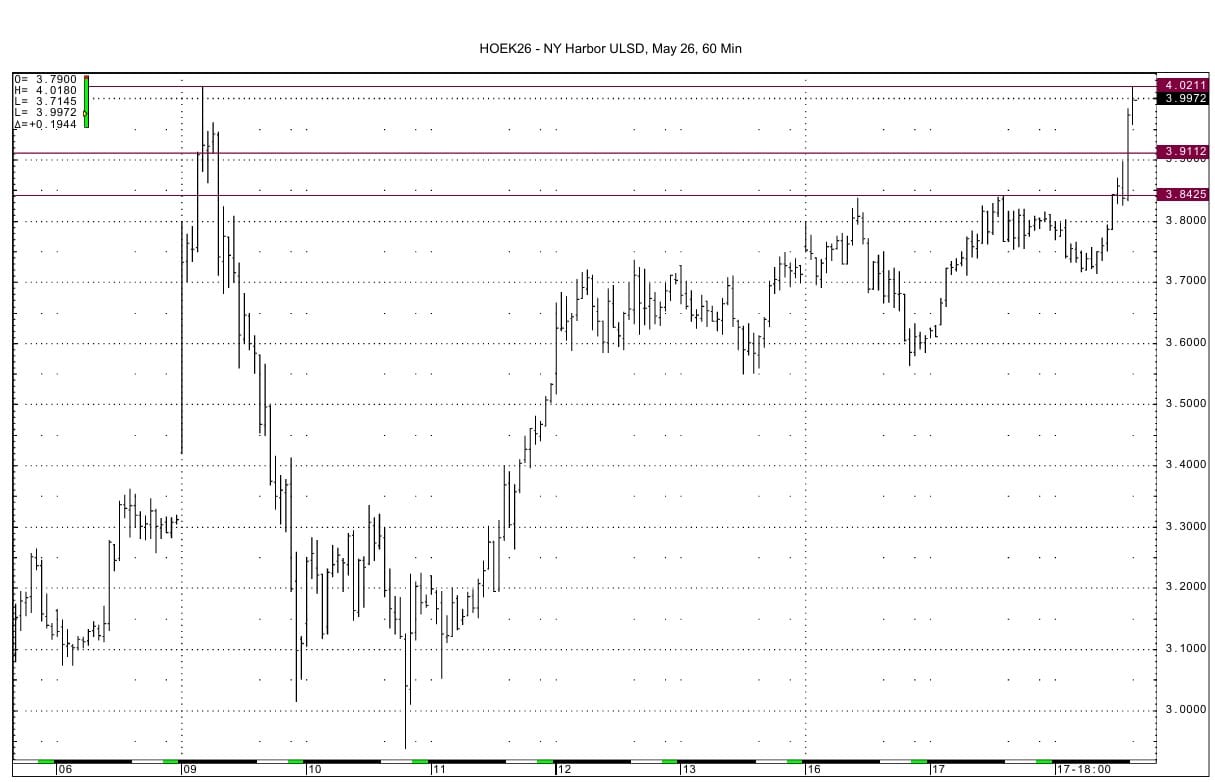
May ULSD resistance lies at the recent high at 4.0211. Support is seen at 3.9112-3.9126 and then at 3.8425-3.8441.
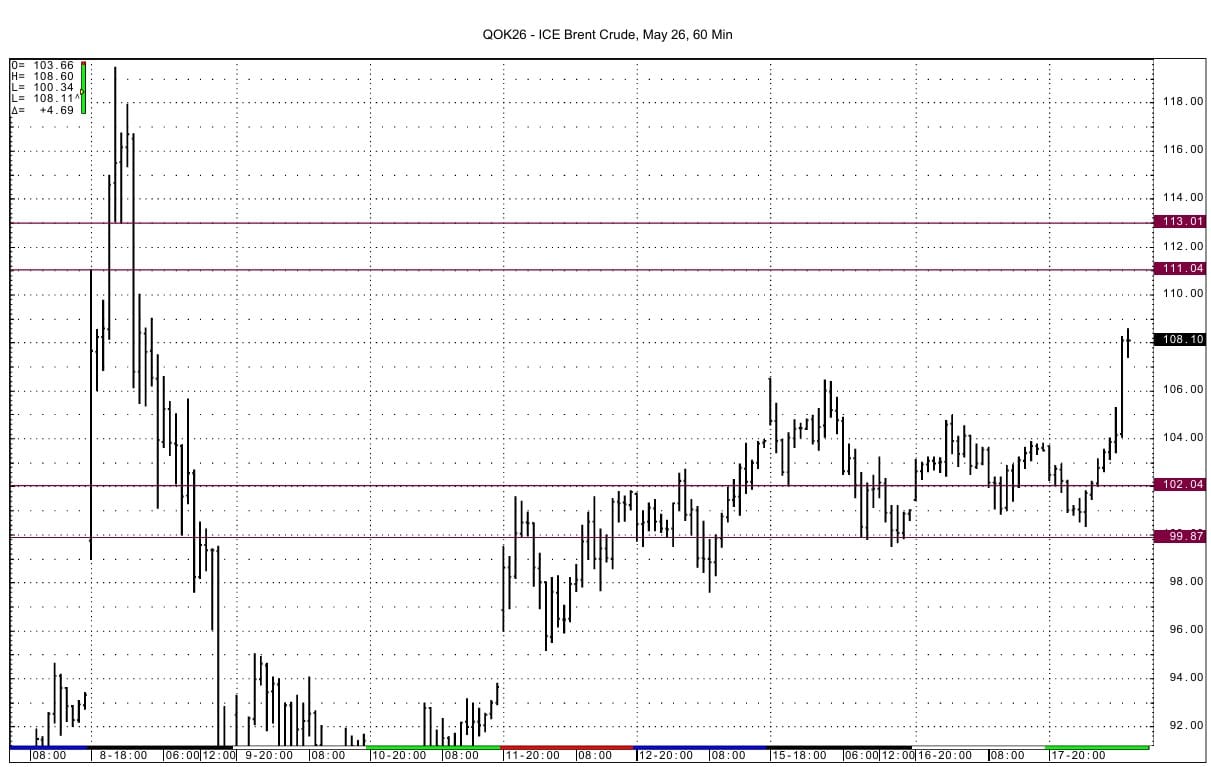
ING offers the following commentary re Brent crude prices:" ICE Brent has now settled above $100/bbl for four consecutive days. With no sign of de-escalation in the Middle East, the market continues to consolidate above this key level. " Support is seen at the $102 area and then at the $99.80 level. Resistance is seen at the $111 and then $113 areas--as per the May 60 minute chart.
Natural Gas Market Overview
Natural Gas--NG is up 2.9 cents at $3.062
NG futures are higher now, supported by the sharp uptick in the energies on the back of the news of the attack on the large South Pars gas field between Iran and Qatar. Overnight prices were lower as the weather forecast is showing above normal temperatures for almost all of the US in the 6 through 14 day window. Also, likely weighing on NG prices is the loss of some feedgas demand from Freeport the past few days, as well as the expectation for a bearish EIA gas storage number tomorrow.
Celsius Energy said yesterday that natural gas demand will peak today (Tuesday), likely until next November. They added that demand will retreat sharply tomorrow (Wednesday) before hugging the 5 year average through the end of the month. The 11-14 day period cumulative HDD count as of late yesterday was showing a total of 44.07 HDD, which is 9.68 HDD below the 10-year average. (Market News)
Late Tuesday, news was that Freeport LNG was receiving about 0.450 BCF/d less feedgas than normal. Flows through Gulf South to Freeport are down to just over 1 BCF/d, from about 1.46 BCF/d the day before. Average gas flows to the nine big U.S. LNG export plants has slid to 18.5 BCF/d so far in March, down from a record 18.7 BCF/d in February. (Reuters)
US dry gas consumption is estimated down 12.2 BCF/d today at 94.16 BCF/d but still above the seasonal five-year average of around 80.9 BCF/d, Bloomberg shows.
Lower 48 states dry gas production was estimated at 113.48 BCF/d yesterday compared to a 30-day average of 113.6 BCF/d, BNEF data shows. Average natural gas output in the U.S. Lower 48 states has risen to 109.9 BCF/d so far in March, up from 109.2 BCF/d in February, as per LSEG data. The monthly record for NG output is the 110.6 BCF/d seen this past December.
The October January CSO's saw several option strikes with sizable increases in open interest from Tuesday's activity. The -$1.00 October January call was sold versus buying of the -$2.00 put in the October January CSO at a cost of 11.0 cents. Additionally in the October January CSO, the -$1.00/-75 cent/-50 cent call butterfly traded 0.6 and 1.1 cents. The CSO also saw the -75 /-50 cent call spread trade in a 1 by 2 ratio at a cost of 0.6 cents. The October January -$1.00 call traded over 5,000 lots worth at a cost of 7.2 cents.
Asian utilities are increasing coal-fired power generation to offset soaring LNG prices and supply disruptions caused by the Middle East conflict, Reuters said. Asia spot LNG prices have doubled to three-year highs during the Iran war. Reuters cites S. Korea, Bangladesh, Pakistan, and the Philippines as taking various measures to offset the LNG cost increases. Since most LNG contracts are linked to oil prices on a three-month lag, Asian buyers will pay more from June, consultancy Wood Mackenzie said.
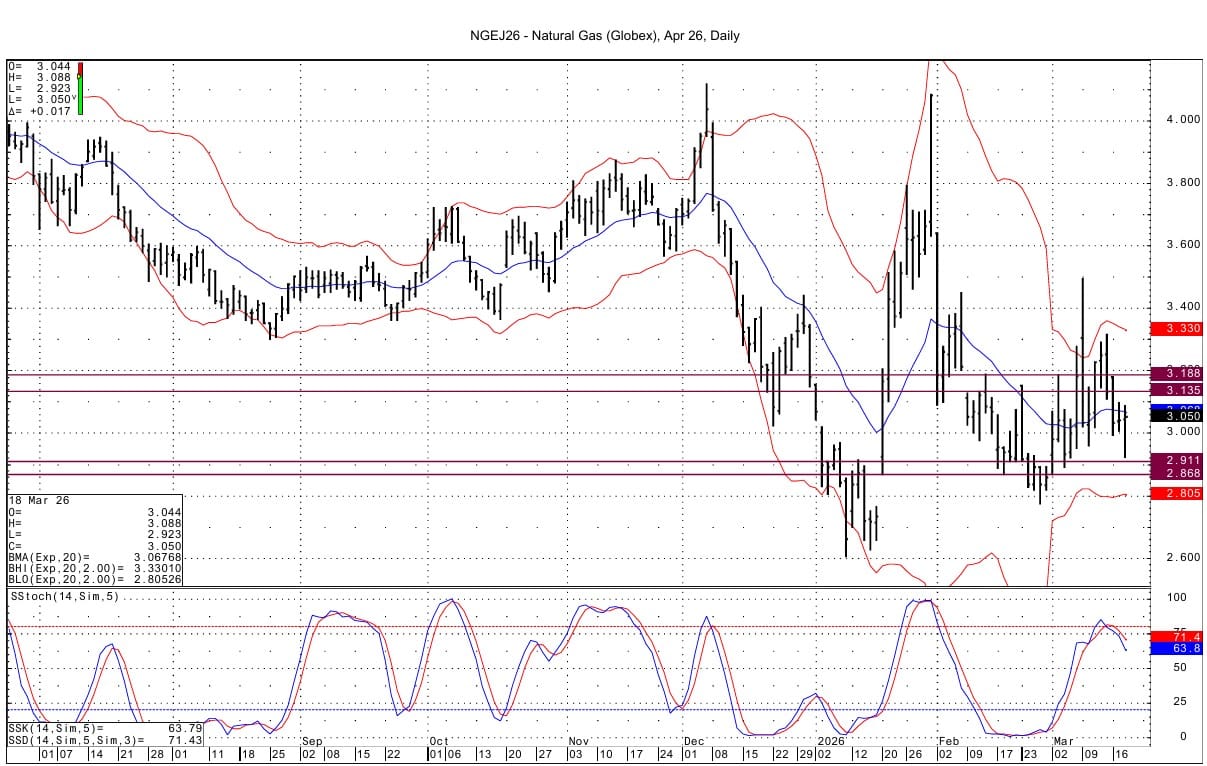
Technically NG spot futures have negative momentum. Support is seen at 2.910-2.912 and then at 2.867-2.868. Resistance lies at 3.130-3.135 and then at 3.188-3.190.
Enjoyed this article?
Subscribe to never miss an issue. Liquidity’s Daily Energy Market Updates provide a comprehensive analysis of both the fundamentals and technical factors driving energy markets.

Click below to view our other newsletters on our website:

Disclaimer
This article and its contents are provided for informational purposes only and are not intended as an offer or solicitation for the purchase or sale of any commodity, futures contract, option contract, or other transaction. Although any statements of fact have been obtained from and are based on sources that the Firm believes to be reliable, we do not guarantee their accuracy, and any such information may be incomplete or condensed.
Commodity trading involves risks, and you should fully understand those risks prior to trading. Liquidity Energy LLC and its affiliates assume no liability for the use of any information contained herein. Neither the information nor any opinion expressed shall be construed as an offer to buy or sell any futures or options on futures contracts. Information contained herein was obtained from sources believed to be reliable, but is not guaranteed as to its accuracy. Any opinions expressed herein are subject to change without notice, are that of the individual, and not necessarily the opinion of Liquidity Energy LLC
Reply